
Force-Free vs Balanced Dog Training: Understanding the Difference (and Why It Matters)
Learn the difference between force-free and balanced dog training, what counts as an aversive, and why choosing a trainer who shares your values matters.
1/28/20263 min read

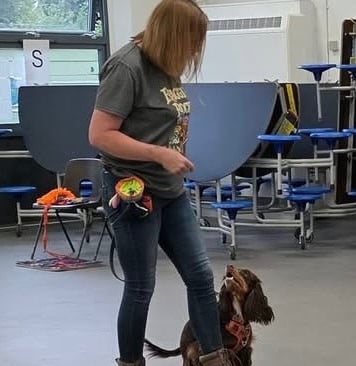
Choosing a dog trainer can feel overwhelming — especially when you start hearing terms like force-free, balanced, aversive tools, and corrections.
Many owners are left wondering:
What do these terms actually mean?
Are they just different labels for the same thing?
Does it really matter which approach I choose?
The short answer is: yes, it matters — not just for your dog’s behaviour, but for their emotional wellbeing, your relationship with them, and how safe you feel during training.
What Is Force-Free Dog Training?
Force-free (also known as positive reinforcement or reward-based training) focuses on:
Teaching dogs what to do, rather than punishing what we don’t want
Using rewards to reinforce desired behaviour
Managing environments to prevent overwhelm
Supporting emotional wellbeing and learning
Avoiding pain, fear, intimidation, or discomfort
Force-free training does not mean:
No boundaries
No structure
No rules
Letting dogs “do whatever they want”
It means behaviour is changed through learning, trust, and emotional safety, rather than fear or discomfort.
What Is Balanced Dog Training?
Balanced training uses a combination of:
Rewards (positive reinforcement)
Corrections or aversives to stop unwanted behaviour
Balanced trainers may describe their approach as:
“Using all four quadrants”
“Fair but firm”
“Tools when needed”
“Communication, not punishment”
The defining difference is that aversive tools or techniques are included as an option.
What Are Aversive Tools?
An aversive is anything a dog finds unpleasant enough that they will try to avoid it.
Aversives are used to:
Stop behaviour
Suppress reactions
Discourage choices
Common aversive tools include:
Slip leads used with tightening pressure
Choke chains
Prong (pinch) collars
Shock or e-collars
Spray collars
Rattle cans
Physical leash corrections
Verbal intimidation or yelling
What matters is how the dog experiences the tool, not how the human describes it.
If a dog changes behaviour to avoid discomfort, that tool or method is aversive.
Why Aversive Tools “Work” (At First)
Aversives can appear effective in the short term because:
Behaviour is suppressed
Dogs become quieter or more compliant
Reactions may stop temporarily
But suppression is not the same as learning.
The dog has not learned:
How to cope
What to do instead
That the situation is safe
They have learned: “If I do this, something unpleasant happens.”
The Risk of Suppression
Suppressing behaviour without addressing emotion can lead to:
Increased anxiety
Reduced warning signals (no growling before snapping)
Emotional shutdown
Escalation later
Damage to trust and confidence
This is particularly important for:
Reactive dogs
Fearful dogs
Puppies
Sensitive breeds
Dogs with a history of stress or trauma
A dog who looks calm is not always a dog who feels calm.
How Force-Free Training Approaches Behaviour Differently
Force-free training asks different questions:
Why is this behaviour happening?
What emotion is driving it?
What skill is missing?
How can we make this easier for the dog to succeed?
Instead of stopping behaviour through discomfort, force-free training:
Changes emotional responses
Builds coping skills
Works under threshold
Creates predictable, safe learning environments
The goal is confidence and understanding, not compliance through fear.
“But Balanced Training Uses Rewards Too…”
This is true — and it’s where confusion often arises.
The key difference is not whether rewards are used, but whether aversives are also used. Force-free training draws a clear ethical boundary: Behaviour change should not rely on fear, pain, or intimidation. Balanced training does not draw that boundary in the same way.
Why Your Trainer’s Values Matter
Dog training is not value-neutral.
A trainer’s beliefs influence:
How your dog is handled
What happens when your dog struggles
Whether behaviour is seen as communication or defiance
How mistakes are treated — as learning opportunities or disobedience
Choosing a trainer whose values align with yours matters because:
You will feel safer asking questions
You will feel confident following guidance
Your dog’s welfare will be prioritised in the way you expect
If you are uncomfortable with aversive tools or corrections, that discomfort is important information — not something to ignore.
Questions to Ask a Trainer Before You Book
A good trainer should be happy to answer questions openly.
Consider asking:
Do you use aversive tools or corrections?
What happens if a dog gets it “wrong”?
How do you work with fear or reactivity?
How do you define success in training?
What happens if a dog is struggling?
Clear, transparent answers matter more than labels.
Final Thoughts
There is no single “right” trainer for everyone — but there is a right trainer for you and your dog.
Understanding the difference between force-free and balanced training allows you to make an informed choice based on:
Your values
Your dog’s emotional needs
The kind of relationship you want to build
Training should help dogs feel safer, more confident, and better able to navigate the world — not quieter through fear.
CONTACT
Questions? Reach out anytime, we're here.
Phone
07928 412653
© 2025. All rights reserved.