It’s Not ‘Just’ Walking Dogs: The Reality of Being a Professional Dog Walker in the UK
Professional dog walking isn’t just a stroll in the park. A realistic look at the work, skill and responsibility behind the job.
2/9/20264 min read
“It’s Just Walking Dogs, Right?”
When you hand your dog’s lead to someone else, you’re trusting them with far more than just a walk. Over the years, working with dogs in both training and day-to-day care, I’ve learned just how much responsibility sits in that simple exchange – and how often the work behind it is quietly misunderstood.
“It must be lovely, just walking dogs all day.”
It’s usually said with a smile. As if the job is a gentle wander around the park, a bit of fresh air, and a nice way to earn some easy money.
And yes – there are lovely moments. Watching dogs mooch about happily, seeing nervous ones grow in confidence, knowing they’re getting what they need while their owners are at work. That part is genuinely brilliant.
But the reality of professional dog walking in the looks very different from the romantic version people imagine.
A working day isn’t a single stroll.
It’s multiple walks, often back-to-back, in all weathers.
It’s loading and unloading dogs safely, drying muddy paws, changing soaked clothes, and heading straight back out again.
It’s finishing the day tired, wet, and smelling faintly of wet dog no matter how much hand sanitiser you’ve used.
There’s also the physical side that people don’t see.
Dog walking is hard on the body.
Shoulders, elbows, hips, knees and feet take a constant battering. Add in strong dogs, uneven ground, winter mud, summer heat, and you’ve got a job that’s far closer to manual labour than people realise.
Then there’s the behind-the-scenes cost of doing the job properly.
Dog walkers don’t get sick pay.
We don’t get holiday pay.
If we’re ill, injured, or need time off, we simply don’t earn.
Equipment wears out. Leads snap. Poo bags are a consant.
Workwear takes a hammering. Waterproofs, boots, layers – all paid for out of pocket.
Vehicles get filled with mud, dog hair, and the general chaos of real working life.
And that’s before you even factor in the mental load of the job.
Every dog is different.
Different training backgrounds.
Different cues and commands.
Different comfort levels around other dogs, people, traffic, wildlife.
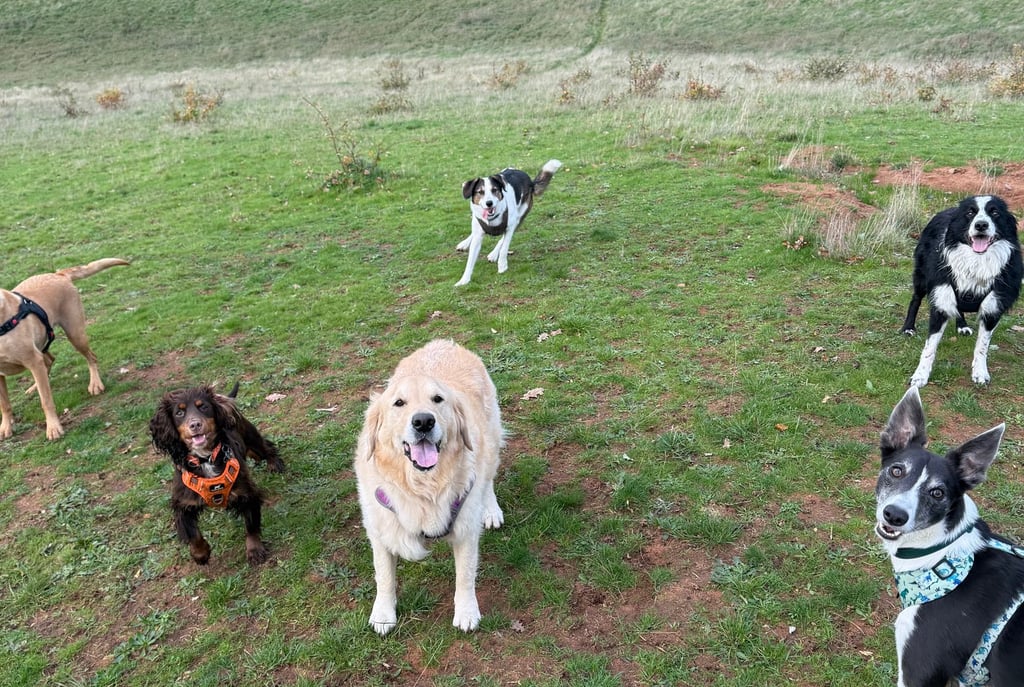
Even the most sociable dogs, just like humans, tend to have one or two individuals they don’t really click with. A professional walker is constantly managing group dynamics, scanning the environment, adjusting routes, spacing dogs, and making micro-decisions to keep everyone safe and calm.
It’s not “just walking”.
It’s risk management on legs.
One of the biggest issues in the UK dog walking industry is that, collectively, we under-charge.
Not because the work isn’t valuable.
But because the industry has grown in a way that encourages people to compete on price rather than quality, experience or skill.
Many people start out charging low because they’re kind, because they’re new, or because they don’t want to price themselves out of work. Others feel pressured to match the cheapest local rates, even when those rates don’t reflect the real cost of doing the job sustainably.
The result is an industry where a lot of very dedicated, hard-working people are operating on tight margins, working long days, and quietly burning themselves out.
What’s tricky is that most clients aren’t trying to take advantage. They’re often comparing prices in good faith, not realising that a cheaper walk usually means someone absorbing the shortfall personally – in their time, their energy, their health, or their long-term ability to stay in the job.
And experience matters in this line of work.
The ability to read body language before tension escalates.
To notice the subtle limp that wasn’t there yesterday.
To manage mixed groups safely.
To adapt walks to weather, age, confidence and physical ability.
To make judgement calls in real-world situations that don’t come with a pause button.
Those skills don’t come from nowhere. They come from time on the ground, working with lots of different dogs, seeing what goes wrong, learning how to prevent it next time, and staying in the industry long enough to build that depth of experience. But people don’t stay in physically demanding, emotionally demanding jobs forever if the work isn’t sustainable.
This isn’t about dog walkers wanting to be “expensive”.
It’s about recognising that good dog walking is skilled work, not casual pocket money.
So when you’re choosing a dog walker, you’re not just paying for someone to attach a lead and head out of the door. You’re paying for experience, judgement, safety, reliability, and care – the things that mean your dog comes home happy, healthy and intact at the end of every walk.
Because good dog walkers don’t just walk dogs.
They manage situations you never even hear about.
They notice the small things before they become big problems.
They keep your dog safe in a world full of variables.
And that kind of care has real value – even if the industry as a whole is still catching up with that fact.
I don’t share this to moan about the job – I genuinely love what I do. But I do think it’s worth shining a light on what goes into doing it properly. Most days, it’s muddy boots, aching shoulders, wet gloves and a lot of quiet decision-making that no one ever sees. And honestly? I wouldn’t swap it. I just think it deserves to be understood a little better.
CONTACT
Questions? Reach out anytime, we're here.
Phone
07928 412653
© 2025. All rights reserved.