The Secret History of You and Your Dog: How We Changed Each Other Forever
Why do dogs follow our gestures, hold our gaze, and struggle when we leave? The answer lies in 15,000 years of co-evolution. Explore the fascinating science behind the human-dog bond.
5/31/20265 min read
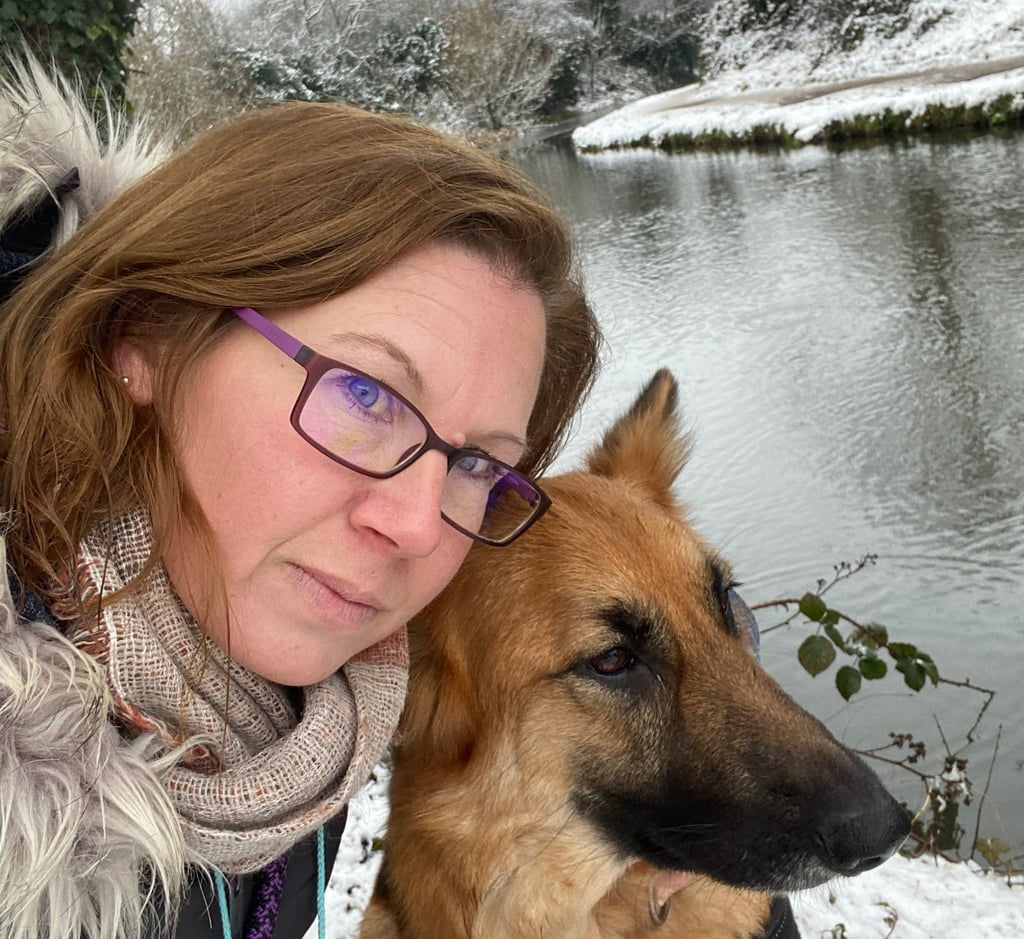
If you’ve ever locked eyes with your dog across the room and felt like they genuinely understood you — you weren’t imagining it. That moment of connection has around 15,000 years of history behind it. And the story of how dogs and humans ended up here, on the sofa, sharing a look that neither of us can quite explain, is one of the most fascinating in the natural world. Because here’s the thing most people don’t realise. Dogs didn’t just adapt to live with us. We adapted too.
Where It All Started
The exact origin of dog domestication is still debated by scientists. But what we know is this: somewhere between 15,000 and 40,000 years ago, a population of wolves began to diverge. Not through human design — there was no selective breeding programme, no deliberate plan. It happened gradually, through proximity. The wolves least afraid of humans had an advantage. They could scavenge at the edges of human camps. They ate better. They survived longer. They reproduced more. Over generations, those wolves became something different. Smaller skulls. Softer facial features. Juvenilised traits that persisted into adulthood — floppy ears, rounder faces, a tendency to play. Scientists call this process neoteny, the retention of juvenile characteristics. It’s one of the reasons dogs look and behave so differently from wolves, even as puppies. They became dogs.
What Dogs Lost — And What They Gained
Compared to wolves, domestic dogs gave up a lot. They lost some of their independence. Their ability to survive alone in the wild. Much of their wariness. But what they gained was extraordinary. Dogs developed something wolves simply don’t have — a specific, evolved ability to read human faces and human gestures. If you point at something, your dog looks where you’re pointing. A wolf raised by humans doesn’t reliably do this. A chimpanzee, despite being far more closely related to us genetically, largely doesn’t either. This ability isn’t learned. It’s genetic. It emerged through thousands of generations of dogs who were better at reading us surviving and reproducing more successfully than those who weren’t.
Dogs also developed a specific gaze. The long, soft eye contact that feels so meaningful when your dog looks at you? Wolves don’t do this. In wolf society, prolonged eye contact is a threat. But in dogs, it evolved into something entirely different. When a dog makes that soft eye contact with a human, both the dog and the human release oxytocin — the same bonding hormone involved in the attachment between a parent and their infant. It’s not a coincidence. It’s biology. A feedback loop that reinforces the bond on both sides, every single time it happens. Your dog looking at you isn’t just cute. It’s one of the most sophisticated pieces of co-evolved communication in the animal kingdom.
The Neuroscience of the Bond
It goes deeper than oxytocin. Research has shown that dogs process human emotional expressions in a similar region of the brain to how humans process faces. They can distinguish happy human faces from angry ones. They show a left-gaze bias when looking at human faces — meaning they look to their left, which focuses on the right side of our face, the side most expressive of emotion. Humans do exactly the same thing when reading each other. Dogs also show preferential neural responses to the scent of familiar humans over unfamiliar ones — even over familiar dogs. When a dog smells their owner, the reward centres of their brain activate. You are, neurologically speaking, your dog’s favourite thing in the world. Which brings us to something really important.
Why Being Apart From Us Is So Hard For Some Dogs
Dogs didn’t evolve to be alone. For thousands of years, they lived alongside humans almost constantly. They slept near us, worked with us, travelled with us. Solitude wasn’t part of the deal. It wasn’t something they needed to cope with because it simply didn’t happen. And then modern life arrived. Now we ask dogs to be alone for hours at a time, in quiet houses, with none of the social contact their entire biology is built around. For many dogs, this is genuinely one of the hardest things we ask of them. Separation related behaviours — distress vocalisations, destructive behaviour, inability to settle, house soiling when alone — are not a dog being naughty or manipulative. They are a dog whose co-evolved need for human proximity is not being met. A dog whose nervous system is registering the absence of their person as something close to a threat. Understanding the evolutionary context doesn’t mean we can never leave our dogs. It means we understand why building that tolerance gradually, carefully and compassionately matters so much. It’s not indulgence. It’s biology.
What We Changed Too
This is the part that often surprises people. We didn’t just shape dogs. Dogs shaped us. Humans who lived alongside dogs had real advantages. Dogs provided early warning systems — alerting to predators, strangers, changes in the environment. They assisted with hunting. They provided warmth. In some cultures, they were guardians of livestock and children. The humans who worked well with dogs — who could read them, communicate with them, build relationships with them — had better outcomes. Over thousands of years, that may have selected for humans who are unusually sensitive to non-verbal communication, not just from dogs, but from each other.
There’s also growing evidence that the human capacity for interspecies bonding, and the neurochemical rewards we get from it, was reinforced through our long relationship with dogs. We didn’t just make dogs more human. We may have made ourselves more dog.
We didn’t domesticate dogs. We domesticated each other.
The Genetic Footprint
Modern genomic research has identified specific gene variants in dogs that differ from wolves — including genes associated with starch digestion (dogs can process carbohydrates far better than wolves, an adaptation to living alongside farming humans), and crucially, genes associated with sociability and hyper-attachment to humans.
One particularly interesting finding involves the gene WBSCR17. Variations in the equivalent gene in humans are associated with Williams syndrome, a condition characterised by an unusually high degree of social friendliness and trust. Dogs carry similar variants.
Why This Matters More Than You Think
Understanding co-evolution changes how we see our dogs. Your dog isn’t a wolf who needs to be dominated. They aren’t a blank slate waiting to be trained into shape. They are the product of a 15,000 year partnership — an animal whose entire biology, behaviour, and emotional world has been shaped by living alongside humans. They are designed to look at us. To follow our gestures. To seek our attention. To form deep attachments. To feel safest when we are near. And we are designed to respond to them. That’s not weakness on either side. That’s the relationship working exactly as evolution intended.
The Flip Side
Here’s where it gets important for modern dog owners. That same co-evolution created enormous diversity. Because once humans started actively shaping dogs — selecting them for specific jobs, specific traits, specific looks — the dog that emerged in every corner of the world looked and behaved very differently. The dog bred to herd sheep in the Scottish Highlands. The dog bred to flush birds in the English countryside. The dog bred to guard livestock in the mountains of central Asia. The dog bred to sit on the laps of Chinese emperors. Same species. Wildly different animals. And that diversity — those thousands of years of selective pressure — doesn’t disappear because your dog now lives in a semi-detached in Stourbridge. It’s still in there. Shaping how they think, how they move, how they cope, what they need.
Which is exactly what we’re going to explore in the blogs that follow this one.
The Bottom Line
Your dog is not a problem to be solved or a pet to be managed. They are the result of one of the longest, most complex, most mutually beneficial relationships in the history of life on Earth. Understanding that changes everything — how we train, how we walk, how we choose dogs, and how we live with them.
Next time your dog catches your eye across the room, remember: that moment has been 15,000 years in the making.
In the next blog in this series, we explore how that co-evolution shaped the way dogs communicate with us — and why understanding their language changes everything.
CONTACT
Questions? Reach out anytime, we're here.
Phone
07928 412653
© 2025. All rights reserved.