
What Your Dog Is Really Telling You on Walks
Understanding dog behaviour on walks starts with communication. Discover why dogs pull, bark, ignore recall, and how stress, breed genetics, and arousal affect walking behaviour.
1/11/20263 min read
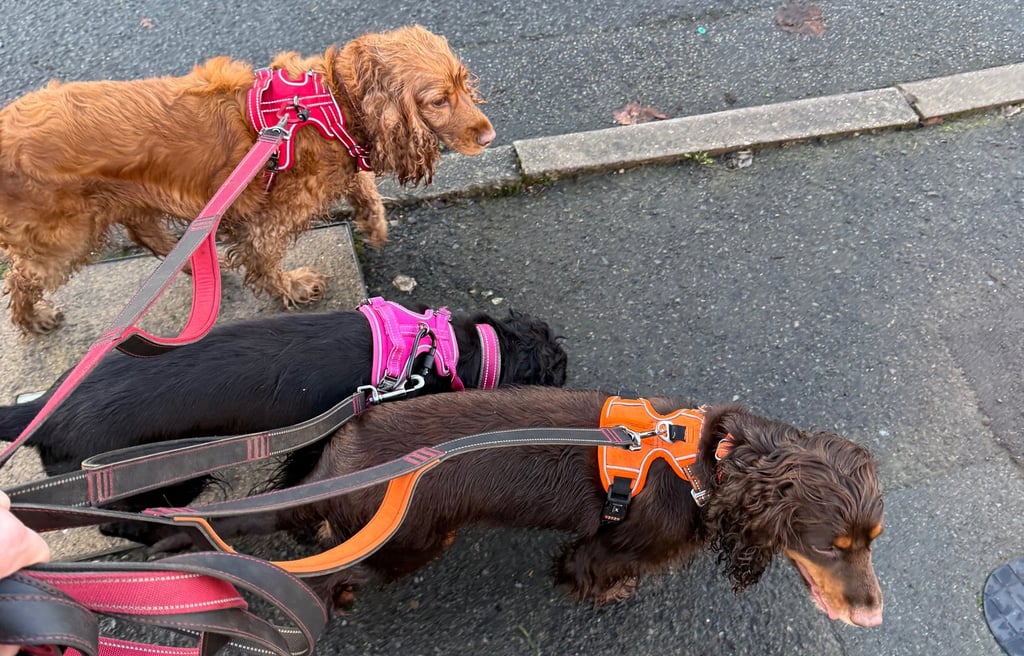
For many dog owners, walks are where things start to feel difficult. Pulling on the lead, barking at other dogs, ignoring recall, becoming over-excited, or appearing to “switch off” completely. Owners are often told they need better control, more training, or stricter rules. But before we try to fix behaviour, it’s essential to understand something fundamental:
Your dog is constantly communicating with you on walks.
Once you learn how to read that communication, walks become clearer, calmer, and far more enjoyable.
Dogs Communicate Through Their Bodies
Dogs don’t use words — they use movement, posture, speed, direction, and behaviour to express how they’re feeling. On walks, these signals are often more obvious because the environment is stimulating, unpredictable, or overwhelming.
You might notice:
Pulling hard ahead with their nose glued to the ground
Freezing or slowing when approaching other dogs or people
Barking or lunging on the lead
Ignoring recall when off lead
Sudden over-arousal or frantic behaviour
None of these behaviours happen “out of nowhere”.
They’re messages
Nose Down, World On: Why Excitement Takes Over
For many dogs — particularly scent-driven breeds — walks are a sensory explosion.
Sniffing isn’t just “having a good smell”. It’s how dogs:
Gather information
Regulate emotions
Process their environment
A dog with their nose down and body moving quickly is often highly aroused, not disobedient. This can look like poor recall, pulling, or difficulty focusing, but it’s often a sign that the dog’s brain is fully engaged elsewhere.
Breed Matters More Than We Think
Not all dogs experience walks in the same way. Genetics play a huge role in how dogs move, explore, and interact with the world.
Different breeds were developed for different jobs:
Spaniels and retrievers are designed to hunt, search, and move forward
Herding breeds are highly sensitive to movement and control
Terriers are intense, independent, and driven
Sighthounds process the world visually and quickly
Expecting all dogs to walk, interact, or recall in the same way simply isn’t realistic. When we adapt walks and training to a dog’s breed needs, behaviour often improves without conflict.
On-Lead Interactions & Boundary Issues
Many dogs struggle most when meeting other dogs on the lead.
On lead, dogs:
Can’t choose distance
Can’t move naturally
Can’t communicate freely
This can lead to tension, frustration, or defensive behaviour — even in dogs who are perfectly sociable off lead. A dog barking or lunging on the lead isn’t being dominant or naughty. They’re communicating discomfort, uncertainty, or a need for space. Not every dog wants or needs to interact with other dogs during a walk. In fact, constant greetings can sometimes create frustration or stress. I explore this in more detail in Should You Let Your Dog Say Hello to Every Dog on Walks?
Frustration vs Fear: When Dogs Just Want to Say Hello
It’s important to recognise that not all barking, pulling, or lunging is about fear or needing space. Some dogs react on the lead because they want to say hello and feel frustrated that they can’t.
These dogs are often:
Very social
Used to greeting other dogs off lead
Easily excited
Still learning impulse control
Their behaviour can look exactly the same as fear-based reactivity, but emotionally they’re saying: “I really want to get to you and I can’t.” Understanding the difference matters. For some dogs, increasing distance helps. For others, the focus needs to be on lowering arousal, building engagement, and changing expectations around greetings.
Off-Lead Walks & Recall: Why It Falls Apart Outdoors
Recall problems are one of the biggest frustrations for dog owners. A dog who recalls perfectly in the garden but ignores you outside isn’t being stubborn.
Outdoors, dogs are balancing:
Smells
Movement
Other dogs
Their own excitement levels
If the emotional load is too high, recall simply can’t compete. This is where understanding your dog’s stress bucket becomes vital.
Understanding the Stress Bucket
Imagine your dog carries a bucket.
Every challenge adds to it:
Busy environments
Other dogs
Exciting smells
Pressure to behave
Lack of rest
When the bucket is fairly empty, dogs cope well. When it fills up, behaviour spills over.
That spill might look like:
Pulling
Barking or lunging
Ignoring recall
Over-excitement
Freezing or shutting down
Once the bucket overflows, learning stops.
How to Help Empty the Stress Bucket
Helping your dog cope isn’t about removing all challenges — it’s about giving them ways to decompress and reset.
This might include:
Allowing slow, sniffy walks
Choosing quieter routes or times of day
Avoiding forced dog greetings
Building in rest days
Keeping expectations realistic
Supporting emotional regulation before training
Small changes can make a big difference. When a dog’s bucket stays lower, behaviour improves naturally and learning becomes easier.
Rethinking the “Perfect Walk”
A perfect walk isn’t:
A tight heel
Constant recall
Zero sniffing
A successful walk is one where your dog:
Feels safe
Can process their environment
Stays under threshold
Can engage when needed
When we listen to what dogs are telling us, walks become calmer — and training becomes far more effective.
A Gentle Final Thought
If walks feel stressful or confusing, you’re not alone. Every dog experiences the world differently, and sometimes small changes in approach can make a big difference.
If you’d like support with walking, recall, or understanding your dog’s behaviour, you’re welcome to get in touch to chat things through.
CONTACT
Questions? Reach out anytime, we're here.
Phone
07928 412653
© 2025. All rights reserved.