
Born to Do It: Why Your Dog’s Breed History Lives on Your Sofa
Your dog’s breed history doesn’t stay in the past — it lives in their brain, their body and their behaviour every single day. Discover why understanding what your dog was bred to do changes everything about how you live and train together.
6/21/20266 min read
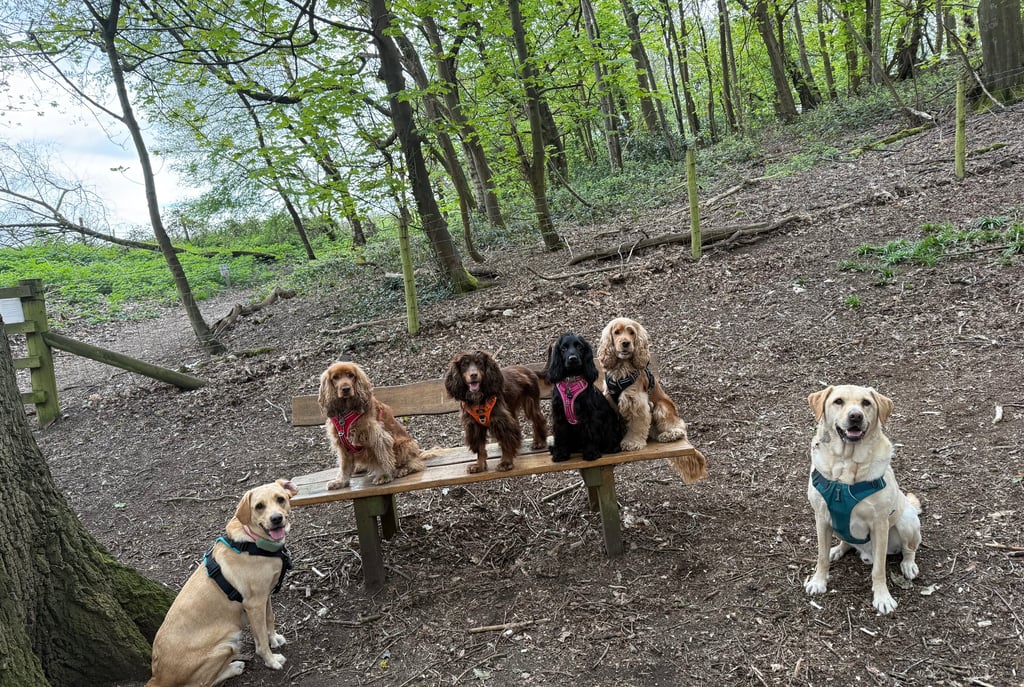
Here’s a question most people don’t ask before getting a dog. Not “is this breed good with children?” Not “do they shed?” Not even “how much exercise do they need?” The question is this: What was this dog built to do for thousands of years — and what happens to them when they can’t do it? Because that answer changes everything.
Selective Breeding Didn’t Just Change How Dogs Look
In the 1st Blog in this series we talked about how co-evolution shaped all dogs. But from around 200 years ago, something more deliberate began. Humans started selecting dogs not just for companionship, but for very specific jobs. And they got extraordinarily good at it.
The result is that modern dog breeds aren’t just cosmetically different from each other. They are neurologically, physiologically and behaviourally different. The Border Collie’s brain is not the same as a Basset Hound’s brain. The Malinois does not experience the world the way a Cavalier King Charles Spaniel does. These differences aren’t superficial. They are deep, genetic, and — crucially — they don’t switch off because the dog now lives in a house in the suburbs.
The Cocker Spaniel: Born to Quarter
Take the Cocker Spaniel. Or the Springer. Or the working spaniels in general. These dogs were bred to quarter — a specific pattern of movement where the dog sweeps back and forth in front of the handler, nose down, working a scent, covering ground systematically to flush birds from cover. It’s an extraordinarily complex behaviour that involves:
Constant independent decision-making
High-drive scent work
Working at speed through dense vegetation
Responding to handler signals while maintaining forward momentum
High physical stamina and arousal tolerance
Now think about what that dog is doing on a walk through a park. Every hedge, every patch of undergrowth, every interesting smell along a fenceline is pulling at instincts that were honed over centuries. When a spaniel dives into a bush, pulls frantically on the lead toward a thicket, or seems utterly unable to disengage from a scent — they are not being difficult. They are being exactly what they were designed to be. The behaviour isn’t a training failure. It’s a breed doing its job. Which is why spaniels often do so much better when their quartering instinct is channelled — through gundog work, scent games, sniffaris in appropriate environments, and owners who understand that the nose-down sprint into a hedgerow isn’t defiance, it’s biology.
The German Shepherd: Born to Watch the Flock
The GSD is one of the most misunderstood breeds in modern pet ownership. These dogs were bred to work alongside a shepherd — not just herding, but monitoring. Watching. Keeping constant awareness of where every member of the group was at all times. Noticing changes. Responding to threats. Moving fluidly between close work and wide patrol.
That translates, in a family home, to a dog who:
Always knows where every family member is
Becomes anxious when the group splits up
Monitors the front door, the garden, the street
Responds strongly to anything that changes in their environment
Can struggle to switch off because “watching” is their default state
What owners often experience as anxiety, velcro behaviour, or over-reactivity is frequently a GSD doing exactly what it was designed to do — just in an environment that doesn’t match the job. GSDs need mental engagement, clear structure, a sense of purpose, and an owner who understands that the dog scanning the room isn’t neurotic. It’s a working dog doing its job in the only environment it has.
The Husky: Born to Run. And Run. And Run.
The Siberian Husky was bred to pull sleds across vast distances in extreme conditions. Not for an hour. Not for a morning. For days. Their cardiovascular system, their joint structure, their pain tolerance and their drive to keep moving are all calibrated for endurance at a level most other breeds simply don’t share. An hour’s walk doesn’t touch it. Neither does two. And here’s the thing that catches many Husky owners off guard — their recall is not unreliable because they’re stubborn. It’s because they were specifically selected to make independent decisions over long distances, away from direct handler control. A Husky who ignores recall in a field is doing exactly what its genetics expect it to do.
This doesn’t make Huskies untrainable. But it does mean that training them requires an understanding of what you’re working with — and a realistic expectation of what “reliable recall” looks like for a dog whose entire genetic history is built around independent movement.
The Border Collie: Born to Think
Border Collies were bred to herd sheep using something remarkable — the “eye.” That intense, fixed, crouching stare that freezes movement. They work at a distance, reading the flock, making split-second decisions, responding to incredibly subtle handler signals.
This requires:
Extraordinary intelligence
Constant mental engagement
Sensitivity to movement and change
The ability to problem-solve independently
An almost obsessive focus on a task
In a family home, that brain doesn’t go quiet. It finds things to focus on. Shadows. Children running. Bicycles. Other dogs. The reflection of light on a wall. Border Collies who develop obsessive behaviours — chasing lights, fixating on moving objects, unable to settle — are not broken. They are highly intelligent dogs whose need for mental engagement and purposeful work is not being met. The brain that was built to manage a flock of sheep doesn’t know what to do with an afternoon on a sofa.
The Terrier: Born to Be Tenacious
Terriers were bred to go to ground — literally. To pursue prey into burrows, hold their own against animals significantly larger than themselves, and keep going regardless of pain, obstacle or instruction to stop. Tenacity wasn’t a desirable trait in a terrier. It was the whole point.
That tenacity, in a modern pet, looks like:
Digging. Constantly.
Refusing to drop something once they have it
Persisting with a behaviour long after you thought you’d addressed it
Independent thinking that makes recall selective at best
A prey drive that switches on fast and takes a long time to switch off
None of this is bad behaviour. All of it is a terrier being a terrier.
The Mastiff and Guardian Breeds: Born to Assess Threat
Guardian breeds — Mastiffs, Rottweilers, Cane Corsos, Anatolian Shepherds — were bred to make independent decisions about threat. To assess strangers. To act without instruction if they perceived danger. That’s an extraordinary skill set. And in the right context, it’s exactly what you want.
In a suburban environment, it means a dog who is naturally suspicious of strangers, who does not warm up quickly, who takes their own time to assess new people or situations, and who may respond to perceived threats in ways that surprise owners who expected a more socially fluid dog.
These breeds are not aggressive by nature. But they are serious. They were not built for the casual sociability that modern dog culture often expects. Understanding that changes how we introduce them, how we manage greetings, and how we set them up for success.
Why This Matters When Choosing a Dog
This is where everything comes together. When people choose a dog based on looks, they sometimes accidentally choose a set of genetic drives, instincts and needs they weren’t prepared for. The family who fell in love with a Husky’s blue eyes and didn’t research their exercise and independence needs. The first-time owner who chose a Malinois because they look like a smaller GSD and seem manageable. The apartment dweller who got a Border Collie because they’re “really intelligent.” None of these people are bad owners. They just didn’t have the information they needed before making a decision that affects both their life and the dog’s for the next decade or more.
Breed Isn’t Everything — But It’s Not Nothing
Individual dogs vary enormously. A well-bred, well-raised Husky with the right owner can absolutely be a wonderful pet. Breed tendencies are tendencies, not guarantees. But understanding what a breed was built for — really understanding it, not just reading a one-paragraph summary — gives you the foundation to:
Meet those needs before they become problems
Stop interpreting breed-typical behaviour as defiance
Choose training approaches that work with genetics rather than against them
Make a more informed decision before you bring a dog home
Train the Dog in Front of You
Understanding breed history is powerful. But it’s also just the starting point. Because within every breed, there is an individual. A dog with their own learning history, their own experiences, their own personality and their own thresholds. The best trainers don’t train breeds. They train dogs. They take what they know about genetics and history, use it to understand the dog’s behaviour and needs — and then they look at the actual animal in front of them. What does this dog find easy? What do they find hard? What do they need more of? What needs to be worked around?
A spaniel who gets to use its nose. A GSD who has a job and a structure. A terrier whose tenacity is channelled into something purposeful. A Border Collie who gets to think. These are not just happier dogs. They are easier dogs. More settled dogs. Dogs whose behaviour makes sense when you understand where it comes from — and who thrive when their training meets them where they are.
The Bottom Line
Your dog is not a blank slate. They arrived with history. With instincts. With a body and brain shaped by generations of selection for a very specific purpose. Understanding that history doesn’t limit what you can do with your dog. It gives you a map. And when you combine that map with training that sees the individual — not just the breed — it makes the journey a whole lot easier.
I hope you’ve enjoyed me stepping out and doing something a little different with this series. We don’t always have to talk about loose leads and recall — sometimes the most useful thing we can do is zoom out, look at the bigger picture, and understand the extraordinary animal we share our lives with.
CONTACT
Questions? Reach out anytime, we're here.
Phone
07928 412653
© 2025. All rights reserved.