When a Dog is Saying No to Interaction
Dogs say no long before they growl or snap — but most of us miss the signals entirely. Learn to recognise the subtle signs of discomfort in dogs, why freezing is a warning not a green light, and why consent in dog handling matters more than we think.
7/19/20265 min read
We’ve taught children to say no.
We’ve taught them that their body belongs to them. That they have the right to opt out of a hug, to move away from someone who makes them uncomfortable, to say “I don’t want to” without owing anyone an explanation.
And yet, somehow, we haven’t extended that same understanding to dogs.
We expect dogs to accept every stroke from every stranger. To tolerate children climbing on them. To endure greetings they didn’t ask for. To sit still while someone they’ve never met puts their face close to theirs.
And when they eventually communicate that they’ve had enough — when they finally say no loudly enough to be heard — we call it aggression.
But here’s the truth.
The dog was saying no long before that moment. We just weren’t listening.
Dogs Don’t Have Words
Dogs cannot say “please don’t touch me.” They cannot say “I’m not comfortable with this.” They cannot say “I need you to back up.”
What they can do is show us.
And they do. Constantly. Patiently. With a vocabulary that is rich, consistent, and remarkably clear — once you know what to look for.
The problem is that most people don’t know what to look for.
We’ve been taught to read obvious signals — a growl, a snap, a bite. These are the signals we’ve learned to respect. But by the time a dog reaches those signals, they’ve already tried everything else. The growl isn’t the beginning of the communication. It’s the end of it.
The Signals We Miss
Dogs communicate discomfort through a whole range of subtle, easy-to-miss signals — what behaviourists call calming signals and stress signals.
When a dog is uncomfortable with interaction, you might see:
• Turning the head away — breaking eye contact, looking to the side
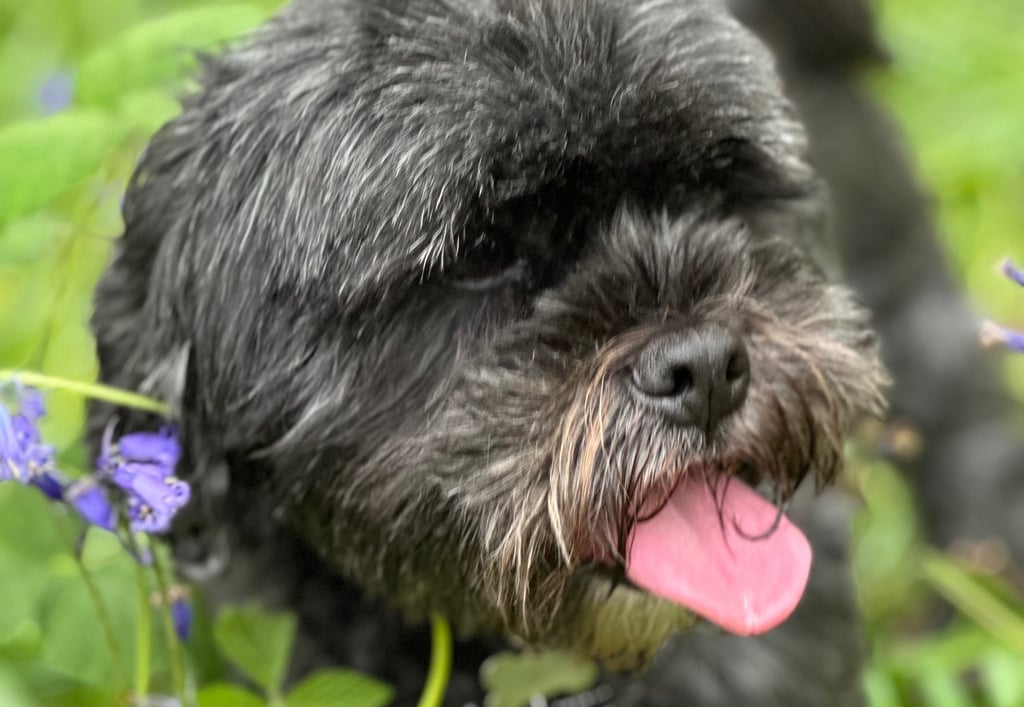
• Lip licking — a quick tongue flick, often misread as anticipation
• Yawning — out of context, not after waking, but in the middle of an interaction
• Whale eye — the whites of the eyes becoming visible as the dog turns their head but keeps their gaze fixed
• Freezing — going very still, sometimes described as the dog “putting up with it”
• Moving away — physically trying to create distance
• Paw lift — one front paw raised slightly off the ground
• Tucked tail — drawn under the body or held very low
• Ears back — flattened or pulled back against the head
• Stiff body — tension through the muscles, weight shifting back
• Excessive sniffing — suddenly very interested in the ground during an interaction
None of these signals are subtle to a dog. They are clear, deliberate communication. To another dog, they would be immediately understood and respected.
To most humans, they look like nothing at all.
The Freeze Is the One That Matters Most
Of all the signals, freezing is the one I want to draw particular attention to.
A dog who goes still during handling or interaction is not being calm. They are not relaxed. They are not “fine with it.”
They are in conflict.
They want to move away — but something is preventing them. Maybe they’re being held. Maybe they feel cornered. Maybe they’ve learned that moving away doesn’t work — that the hand follows them, that the child comes after them, that there is no exit.
A dog who freezes has run out of options.
That freeze is not a green light to continue. It is a warning. And what comes after a freeze, if the interaction continues, is almost always an escalation.
Why Dogs Stop Warning
Here’s the part that matters most — and the part that most people never hear until something goes wrong.
Dogs learn from experience.
If a dog growls and the interaction stops, they learn that growling works. The growl is useful. They’ll use it again — earlier, more reliably, as a clear warning signal that keeps them safe.
But if a dog growls and gets punished — told off, pushed down, corrected — they learn something very different. They learn that growling doesn’t work. That warning doesn’t work.
And so they stop warning.
Not because they’ve become more comfortable. Not because the problem has been resolved. But because they’ve learned that communicating discomfort has consequences.
These are the dogs who bite “without warning.” These are the dogs whose owners say, “He’s never done anything like that before.” Because the warnings were there — they were just suppressed.
As we know from understanding reactivity, suppressing behaviour without addressing the underlying emotion doesn’t resolve anything. It removes the signal while leaving the feeling entirely intact. Dog Reactivity Explained explores this in more detail — the behaviour we see is always the last resort, not the first response.
Consent in Dog Handling
There’s a concept gaining traction in dog training and welfare circles that I think is one of the most important shifts in how we relate to dogs.
Consent.
The idea that dogs should have agency in interactions. That we should offer a hand and let the dog choose to approach, rather than reaching toward them. That we should stroke for a moment and then pause — removing the hand and seeing whether the dog moves toward us for more, or takes the opportunity to move away.
This is sometimes called a consent test or a three-second rule.
It’s simple. It’s quick. And it tells you everything you need to know about whether the dog is enjoying the interaction — or tolerating it.
A dog who moves toward you when you pause is saying yes.
A dog who stays still, moves away, shakes off, or sniffs the ground is saying no.
Both answers are valid. Both deserve to be respected.
This Matters Especially Around Children
Children and dogs are a combination that requires particular care — something I explore in depth through my work with the Kids Around Dogs protocol.
Children are naturally enthusiastic, naturally physical, and naturally drawn to dogs. They move quickly, hug tightly, and often don’t understand why a dog might want space.
This isn’t a criticism of children. It’s a developmental reality.
But it means that the adults in the room carry the full responsibility for reading the dog — because the child cannot yet do it reliably, and the dog cannot advocate for themselves in words.
When adults learn to read early signals — when they see the head turn, the lip lick, the freeze — and step in before the interaction escalates, everyone is safer. The child is protected. The dog is protected. And the relationship between them has a chance to develop in a way that’s genuinely positive rather than built on tolerance and tension.
Advocating for Dogs Who Can’t Advocate for Themselves
One of the most important things we can do for our dogs is advocate for them.
This means:
• Saying “he’s not greeting today” to the stranger who reaches out without asking
• Moving your dog away from the child who is approaching too fast
• Ending an interaction when you see the early signals — before the dog has to escalate
• Not forcing greetings with other dogs because the other owner expects it
• Giving your dog an exit route and honouring it when they use it
It means trusting what your dog is telling you over what the situation seems to call for.
Because your dog isn’t being difficult when they say no. They’re communicating clearly, calmly, and honestly.
The least we can do is listen.
The Bottom Line
Dogs are saying no all the time.
In the head turn. In the lip lick. In the freeze. In the quiet, patient, consistent signals they offer before they ever reach the point of growling or snapping.
Learning to see those signals doesn’t just make dogs safer. It changes the relationship entirely.
Because when a dog knows that their no will be heard — that they have agency, that their communication matters — they don’t need to escalate. They don’t need to shout.
They just need to know that someone is listening.
If you’d like to understand more about how dogs communicate, What Your Dog Is Actually Saying explores the full picture of canine communication and why we miss so much of what dogs tell us every day.
CONTACT
Questions? Reach out anytime, we're here.
Phone
07928 412653
© 2025. All rights reserved.