
Why Dogs Listen at Home But Ignore You Outside
Does your dog listen perfectly at home but ignore you outside? Discover why dogs struggle with distractions and how the environment affects behaviour during walks and training.
3/22/20264 min read
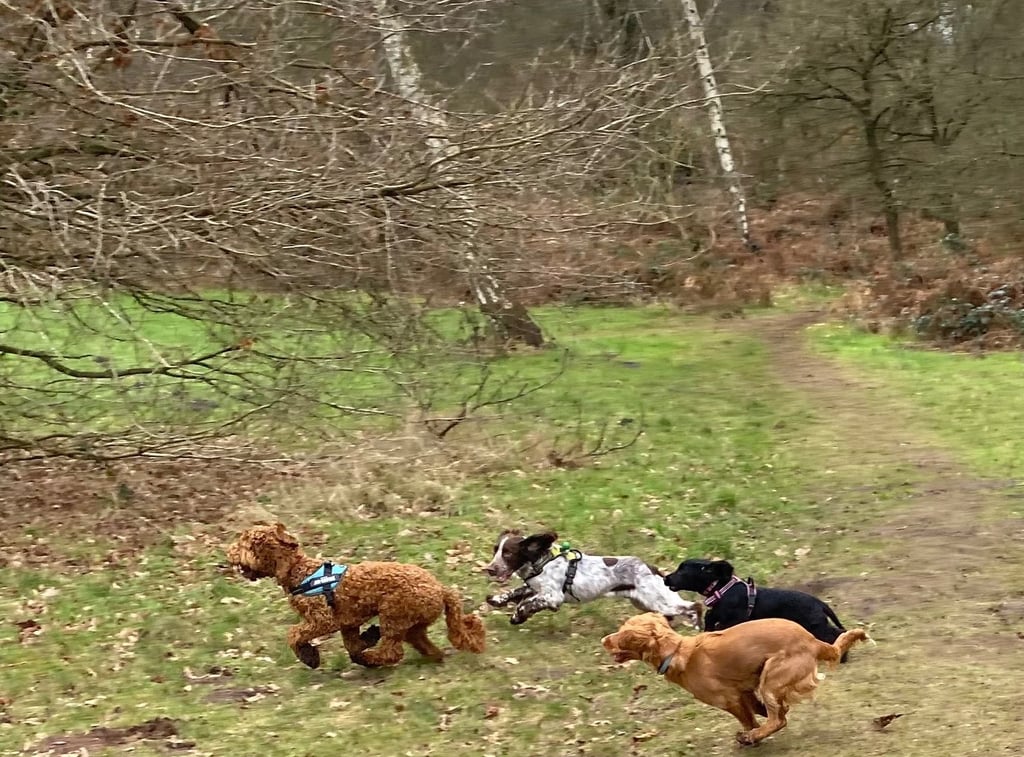
Many dog owners experience the same confusing situation. At home, their dog responds beautifully. They sit, come when called, and seem to understand exactly what’s expected. But the moment they step outside, everything changes. Suddenly the dog seems to forget everything they know. Commands are ignored, attention disappears, and the outside world becomes far more interesting than their owner. This doesn’t mean your dog is being stubborn or deliberately ignoring you. In most cases, it’s simply how learning works for dogs.
Dogs Don’t Automatically Generalise Learning
One of the most surprising things for many owners is that dogs don’t automatically transfer what they learn in one environment to another. A behaviour that feels reliable at home may not yet exist in a completely different location. From the dog’s perspective, the kitchen, the garden, the park and a busy walking path are all entirely different environments with different levels of distraction and emotional stimulation. So while your dog may understand a cue in the quiet of your living room, they may not yet recognise that the same cue applies in a park full of smells, people and other dogs. Dogs need time and experience to learn that behaviours apply across many different situations. This is a normal part of the learning process, and it is one reason why training often needs to gradually expand from quiet environments to more complex ones.
The Outside World Is Full of Powerful Distractions
When dogs step outside, they enter an environment that is incredibly stimulating. There are scents, movement, sounds and other animals. All of these things compete for the dog’s attention. For many dogs, particularly working breeds, the outside world is far more interesting than anything happening inside the home. If the environment becomes too stimulating, dogs can quickly move beyond the point where they are able to focus. This is often described as crossing an emotional threshold, which is something explored further in Thresholds in Dog Training: Why Timing Matters. When a dog goes over this threshold, their ability to think, process information and respond to cues can drop dramatically. Instead of learning and engaging, the dog’s brain shifts into a more reactive state focused on navigating the environment.
Scent Plays a Huge Role Outdoors
One factor that owners often underestimate is just how powerful scent is for dogs. While humans experience the world primarily through sight, dogs experience it largely through their noses. When a dog steps outside, they are immediately surrounded by layers of information that we cannot detect. Every patch of grass, tree trunk or pavement edge may hold scent trails left by other animals. For dogs, these smells are not just interesting — they are meaningful information about the world around them. This is why many dogs become highly focused on sniffing during walks. Their brains are processing a huge amount of sensory information.
If you’d like to explore this topic further, you may enjoy reading What Your Dog Is Really Telling You on Walks, which looks at how dogs experience the environment during walks.
Excitement and Arousal Play a Big Role
Many dogs find the outside world exciting. While excitement can look like happiness, it can also push dogs into a highly aroused state where thinking becomes difficult. When dogs are highly stimulated, their brain is focused on exploring, investigating and reacting to the environment rather than responding to cues they learned at home. Understanding arousal and emotional state is an important part of training. If this topic interests you, you may enjoy reading Why Calm Is a Skill (Not a Personality Trait), which explores how calm behaviour develops. Helping dogs build the ability to regulate their excitement is often an important step in helping them engage more successfully with their owners outside.
Expectations Can Also Develop on Walks
Another factor that can influence behaviour outside is expectation. Dogs are excellent pattern learners. When certain events happen repeatedly, they quickly begin to anticipate them. For example, if a dog regularly greets other dogs on walks, they may begin expecting those interactions every time they see another dog approaching. When that expectation isn’t fulfilled, frustration can build. This frustration can sometimes appear as pulling, barking or lunging on the lead.
This is something I explore further in Should You Let Your Dog Say Hello to Every Dog on Walks?, which looks at how repeated greetings can sometimes create challenges on walks.
Progress Often Looks Messy
Another important thing to remember is that training progress is rarely a straight line. Dogs are constantly learning from their environment, and new places introduce new challenges. A dog that appears reliable in one situation may still be learning how to cope with more complex environments. There may be days when everything goes well, followed by days where the dog struggles again. This doesn’t mean training has failed — it simply reflects the reality of how learning develops.
If you’d like to explore this idea further, you may find What Progress Really Looks Like in Dog Training helpful. It explains why improvement often happens gradually rather than all at once.
Understanding the Dog’s Perspective
When we view behaviour through the dog’s perspective, the situation becomes much clearer. The dog isn’t being difficult or disobedient. They are simply navigating an environment that is far more stimulating and challenging than the quiet spaces where they first learned their behaviours. Helping dogs build the ability to remain calm and engaged in those environments takes time, patience and thoughtful training. But with the right approach, dogs can learn to cope with distractions and gradually become more confident and focused outside the home.
If you’d like support working through these challenges with your own dog, you can find details of my training classes and services here:
www.thepaw-sitiveexperience.co.uk
Based in Stourbridge, I work with owners to help dogs build calm focus and reliable behaviour in real-world situations.
CONTACT
Questions? Reach out anytime, we're here.
Phone
07928 412653
© 2025. All rights reserved.