The Real-World Classroom: Why “Perfect in the Kitchen” Isn’t “Ready for the Park”
Your dog listens perfectly at home… so why does it all fall apart outside? In this blog, we break down why dogs struggle to respond in real-world environments, how distractions affect their ability to think, and what you can do to help them succeed beyond the kitchen.
5/24/20264 min read
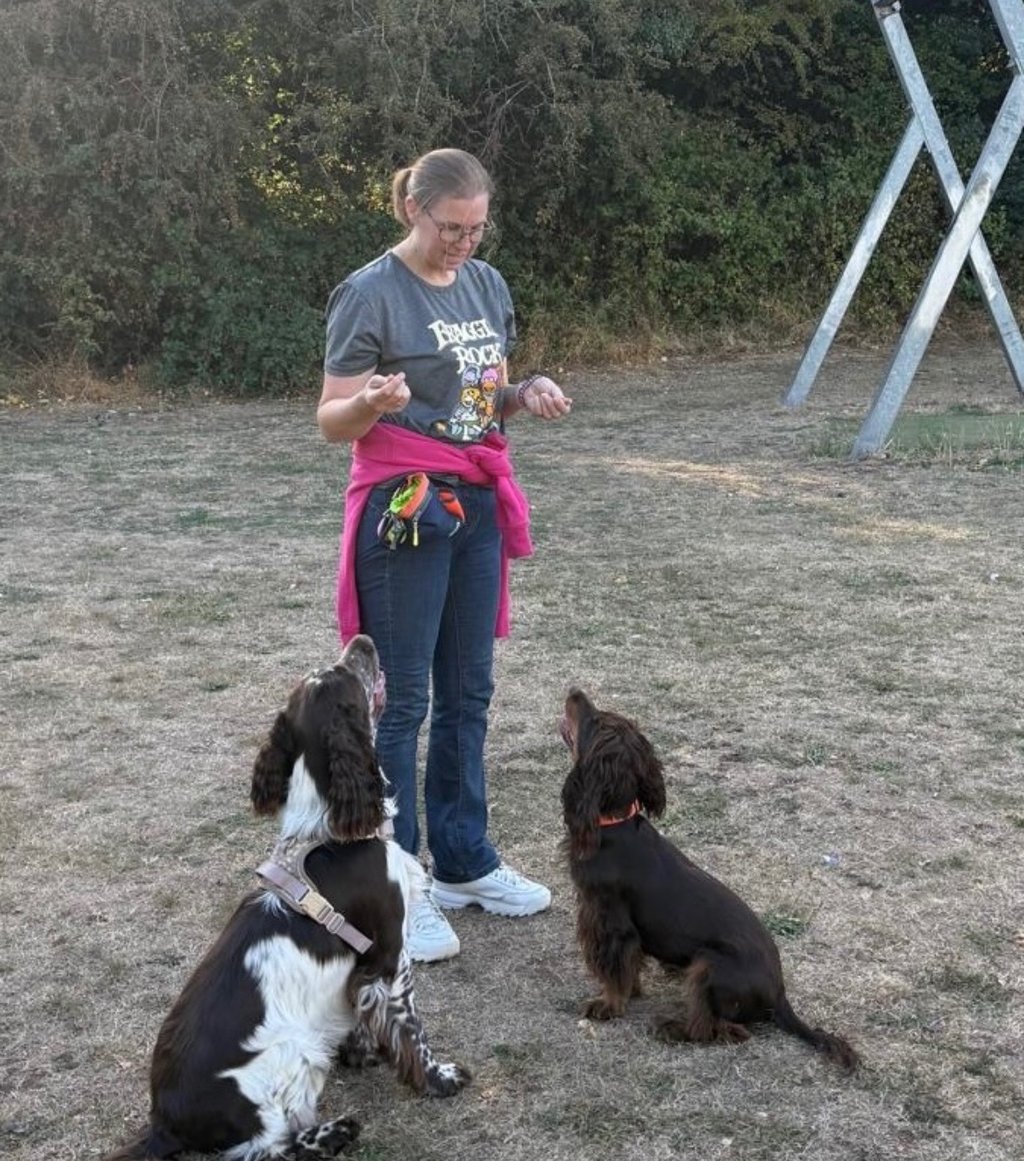

One of the most common frustrations I hear from dog owners is: “But they do it perfectly at home!” You’ve put in the hours, your dog has a rock-solid “sit” or “stay” in the kitchen, but the moment you clip on the lead and step onto the pavement in Stourbridge, it’s like they’ve had a total memory wipe.
As a trainer, I can assure you: your dog isn’t being “naughty,” “stubborn,” or “dominant.” They’re not being difficult — they just haven’t learned that the same cue applies in a completely different environment yet. To help them succeed, we have to understand how a dog’s brain actually processes the world around them.
The “Context-Specific” Brain
Humans are “global” learners. If someone teaches you how to sit on a chair in a classroom, you understand that the same action applies to a chair in a cinema, a park bench, or a stool in a pub. Our brains are wired to extract the “concept” of sitting.
Dogs, however, are context-specific learners. When you teach a “Sit” in your kitchen, your dog isn’t just learning the verbal cue; they are learning a high-definition “picture.” They associate the command with the specific smell of your floor cleaner, the height of the kitchen counter, the lack of wind, and the relative quiet of the house.
To a dog, a “Sit” in the kitchen and a “Sit” at the entrance to Mary Stevens Park are two entirely different tasks. In the park, the “picture” has completely changed. There are squirrels, the scent of a hundred other dogs, the sound of traffic, and the unpredictable movement of cyclists. Their brain is so busy processing this high-arousal environment that the “kitchen cue” simply doesn’t translate. It’s not that they won’t do it; it’s that in that specific context, they haven’t learned it yet.
The Biological Cost of Distraction
When we step outside, the dog’s Autonomic Nervous System shifts. Even a “happy” dog experiences a rise in arousal. As I explain in more detail in my blog on Stress Bucket and Safe Distance Bullseye, every new scent or sound adds “water” to that bucket.
From a human biology perspective, we can think of this as Cognitive Load. When the “background noise” of the environment is high, the brain has less “processing power” available to listen to cues. If your dog is at 80% capacity just trying to stay calm while a toddler runs past, asking them to perform a complex cue like “Wait” or “Heel” might just be the 21% that tips them over the edge.
Why Walks Aren’t Always “Training Sessions”
There is a lot of pressure on owners to “train” for the duration of every walk. But it’s important to distinguish between Training and Enrichment.
When dogs are out with a professional walker or in a well-managed group, the goal isn’t usually to perform a series of “tricks.” The goal is decompression.
A good walk should be about:
The “Sniffari”: Letting the nose lead to lower the heart rate — something I go into more detail about in my blog on The Sniffari: Why Letting Your Dog Lead is the Ultimate Decompression Tool.
Controlled Socialisation: Having fun with friends in a way that is managed and safe.
Arousal Management: Ensuring the group stays below that “overflow” point in the Stress Bucket.
We don’t want dogs to feel like they are “on the clock” 24/7. This is also why simply trying to “tire a dog out” doesn’t always work — something I talk about more in my blog on why tired dogs aren’t always happy dogs.
However, if you want your dog to listen when it really matters (like a recall away from a road), you have to help them generalise those skills during your own time.
How to “Proof” Your Training in the Real World
To help your dog translate their “home skills” to the “outside world,” you have to “proof” the behaviour in layers. You cannot jump from Level 1 (Kitchen) to Level 100 (Bank Holiday Park). You have to fill in the gaps.
The “Front Door” Reset
The most overlooked training spot in the world is your own driveway. Before you even head to the park, stop just outside your front door. Ask for a simple, known cue like a “Touch” or a “Sit.” If your dog can’t focus on you there—where the environment is still relatively familiar—they definitely won’t be able to do it once the “distraction volume” gets turned up at the park.
Change the “Wallpaper”
Practice your cues in “boring” outdoor spots first. Use a quiet corner of a supermarket car park in the evening, a different street than your usual route, or a new patch of grass. By changing the “wallpaper” but keeping the cue the same, you are teaching the brain that “Sit” means “Sit,” regardless of what is happening in the background.
The “Value Exchange”
In a low-distraction environment, a piece of kibble might be a fair “wage” for a sit. But in the park, the “cost” of focusing on you is much higher. Your dog is choosing to ignore a squirrel or a playmate to look at you. To make that choice easy for them, you need to “pay” more. High-value rewards (think chicken, cheese, or a favourite toy) are essential when you are asking for focus in high-arousal environments.
Manage the Red Zone
Refer back to your Safe Distance Bullseye (explained in my blog on Stress Bucket and Safe Distance Bullseye). If you are in the “Red Zone” (too close to a distraction), your dog’s brain has physically switched off the “learning” centres. No amount of shouting or repeating the cue will work. If they can’t listen, you are too close. Move back to the “Orange Zone,” reset, and try again.
The Bottom Line
Training doesn’t end when you leave the house; that’s actually where the real work begins. By understanding that your dog isn’t “ignoring” you, but is actually struggling to process a complex environment, you can lower your frustration.
Next time you’re out, remember: you’re not just walking the dog; you’re helping them navigate a world that is loud, fast, and biologically overwhelming. Give them the grace to learn the “real world” version of their skills, one layer at a time.
CONTACT
Questions? Reach out anytime, we're here.
Phone
07928 412653
© 2025. All rights reserved.