
Therapy Dogs: Why a "Friendly Pet" is Only the Starting Point
A friendly dog is a wonderful thing — but it’s only the starting point for therapy dog work. Discover what therapy dogs really need, why handler responsibility is everything, and how to know if your dog is truly suited to this rewarding but demanding role.
6/28/20264 min read
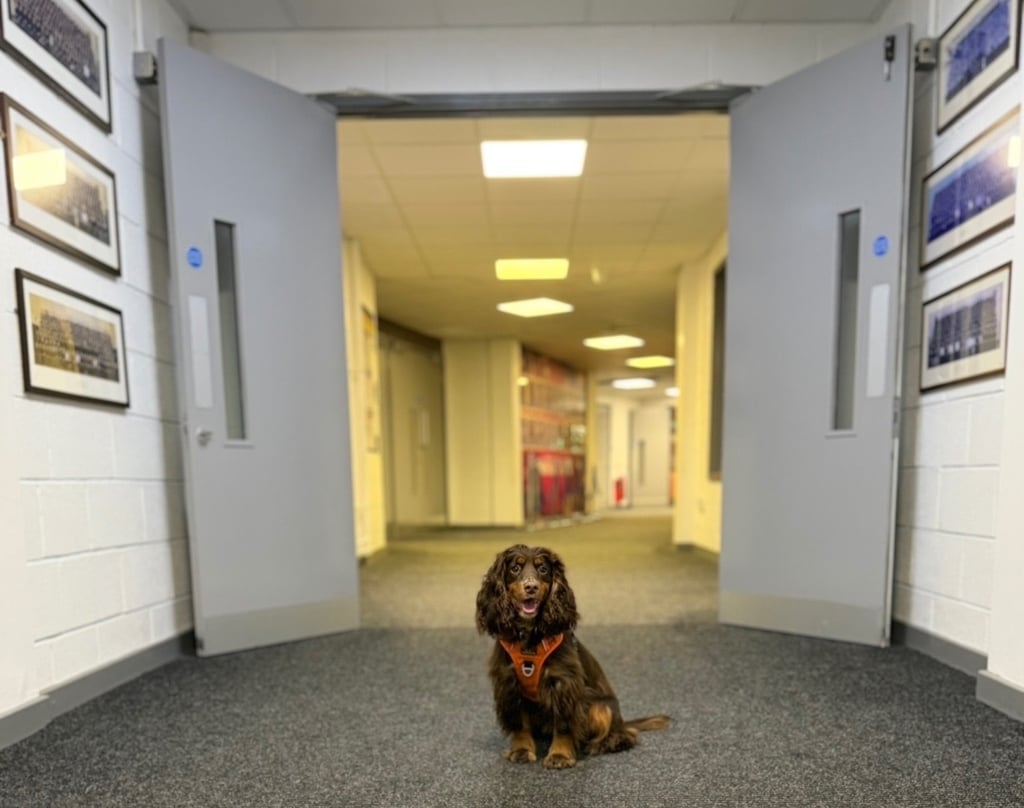
If you’ve ever watched a dog settle calmly beside someone who needed comfort — in a school, a hospital, a care home — and thought “my dog would be perfect for that,” you’re not alone.
It’s one of the most common things people say when they hear about therapy dog work. And they’re often right that their dog has potential. But a friendly, gentle dog is just the beginning. What sits behind every successful therapy dog visit is a level of preparation, training, and ongoing commitment that most people never see.
This blog is for anyone who wants to understand what therapy dog work actually involves — and what it really takes to do it well.
What Is a Therapy Dog?
Before anything else, it’s worth being clear on what a therapy dog actually is — because the term gets used loosely, and the distinctions matter.
A therapy dog is a dog who, alongside their handler, visits settings such as schools, hospitals, care homes, hospices, or libraries to provide comfort, connection, and emotional support to the people they meet. They are not the same as an assistance dog, who is trained to perform specific tasks for a disabled individual and has full public access rights under UK law. They are not the same as an emotional support animal, which is a classification more commonly used in the US and has no legal standing in the UK.
Therapy dogs work in partnership with their handler. The dog and handler are assessed and registered together — as a team. And both have to be ready.
The “Friendly Pet” Myth
Here’s the part that surprises most people.
A dog being friendly is not enough. Not even close.
Therapy dog environments are genuinely demanding. Think about what a dog encounters during a school visit or a hospital ward:
Unfamiliar buildings with unfamiliar smells, sounds and flooring
Unpredictable people — some moving suddenly, some speaking loudly, some approaching in wheelchairs or with walking frames
Children who are excited, nervous, or grieving
Being touched repeatedly by strangers, often in ways that feel intense or overwhelming
No ability to choose distance or opt out of an interaction
Being “on” for an extended period in a high-stimulation environment
A dog who is friendly at home, or even friendly in the park with familiar people, may find this environment completely overwhelming. And a dog who is overwhelmed cannot do the job — and more importantly, should not be asked to.
As we know from understanding how stress accumulates, The Stress Bucket fills during every visit. A therapy dog needs a bucket with significant capacity — and a handler who knows how to monitor it in real time and end the session before it overflows.
What a Therapy Dog Actually Needs
Beyond friendliness, a dog working in therapy settings needs:
Genuine, consistent calmness — not just in familiar environments, but in unpredictable ones. Calm as a trained, reliable skill, not just a personality trait. Why Calm Is a Skill Not a Personality Trait explores what real calmness looks like in dogs.
Excellent foundation training — reliable responses to cues, even in distracting environments
Solid threshold awareness — the ability to remain under threshold in challenging situations, and a handler who can read the early signs that this is changing
Confidence with handling — being touched on all parts of their body, by different people, in different ways, without stress
Habituation to unusual environments — lifts, corridors, equipment, unusual sounds, wheelchairs, crutches
A strong, trusting relationship with their handler — because the handler is the dog’s safe base in every unfamiliar situation
None of these things happen by accident. They are built, deliberately and patiently, over time.
The Handler’s Role
This is something that often gets overlooked in conversations about therapy dogs.
The dog is half the team. The handler is the other half — and arguably carries the greater responsibility.
A therapy dog handler needs to:
Read their dog’s body language accurately and consistently — including the subtle early signals of stress that are easy to miss in the middle of a busy visit. When a Dog is Saying No to Interaction covers many of these signals in detail.
Manage interactions — guiding people in how to approach and touch the dog, and stepping in when interactions feel too intense
Advocate for the dog — ending sessions when needed, even when the people in the room are disappointed
Debrief after every visit — checking the dog for signs of stress, allowing decompression time, monitoring recovery
A therapy dog who is regularly pushed past their comfortable limit will not stay in the role. They will begin to show stress signals before visits, during preparation, or in environments associated with the work. This is not the dog failing. It is the dog communicating clearly — and it is the handler’s job to hear it.
Assessment and Registration
In the UK, therapy dogs and their handlers are assessed and registered through recognised organisations such as Pets As Therapy (PAT) or Animal Assisted Intervention organisations operating in specific sectors.
Assessment typically involves evaluating:
The dog’s temperament and behaviour in a range of situations
The dog’s response to handling by strangers
The dog’s response to unpredictable movement, sounds, and environments
The handler’s ability to read and manage their dog
The team’s suitability for the specific type of visit they intend to do
Passing assessment is not a one-time event. Registered teams are expected to maintain standards, and dogs are reassessed periodically. The welfare of the dog remains the central concern throughout.
The Welfare Question
This is the question every therapy dog handler needs to sit with honestly.
Does my dog enjoy this work?
Not tolerate it. Not cope with it. Enjoy it.
A dog who finds the work genuinely enriching — who shows relaxed, curious, engaged body language during visits, who recovers quickly afterwards, whose stress bucket remains manageable — is a dog who is suited to this role.
A dog who is shutting down, showing stress signals during or after visits, taking longer to recover, or reluctant to engage — is a dog who is telling you something important.
Therapy dog work should enhance a dog’s life, not deplete it. The moment it tips the other way, the welfare of the dog has to come first.
The Bottom Line
Therapy dog work is one of the most rewarding things a dog and handler can do together.
But it is work. It requires preparation, assessment, ongoing monitoring, and a genuine commitment to the welfare of the dog above all else.
A friendly pet is a wonderful thing. A therapy dog is something more — built carefully, assessed thoroughly, and protected always.
If you’re interested in exploring therapy dog work with your dog, the first step is an honest assessment of whether your dog genuinely has the temperament and training foundation for it — and a commitment to building that foundation properly before stepping into any working environment.
It’s worth doing right. For them.
CONTACT
Questions? Reach out anytime, we're here.
Phone
07928 412653
© 2025. All rights reserved.